Confused by the term “calcium phosphate”? Using the wrong type can be a costly mistake. Let’s clarify the names to ensure you get the exact ingredient your product needs.
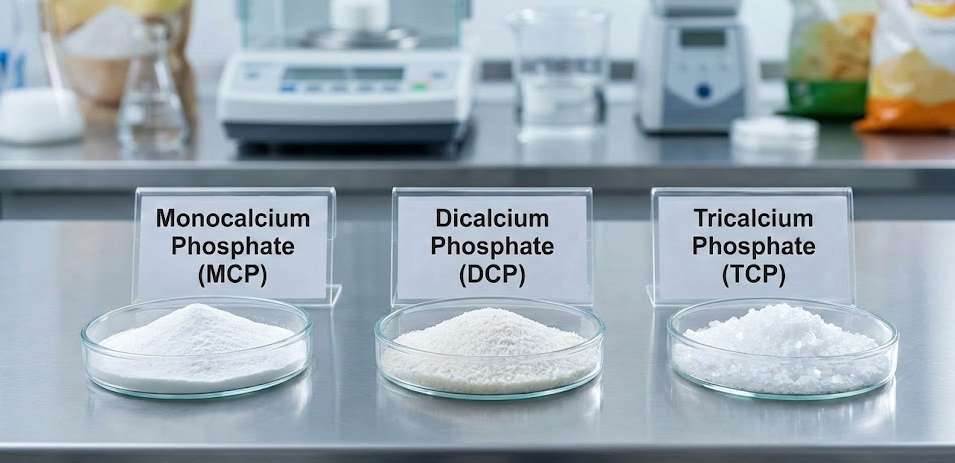
The most common other name for calcium phosphate is Tricalcium Phosphate, often abbreviated as TCP. But this is just one type. The term can also refer to Dicalcium Phosphate (DCP) or Monocalcium Phosphate (MCP). Each has very different properties and uses in the food industry.
Knowing the most common name is a good start. But my experience has shown that this is where the real work begins. Relying on a general term without specifying the exact type can lead to serious problems in production. Let’s look at why this precision is so critical for your success.
Is Tricalcium Phosphate (TCP) the Most Common Type?
You’ve heard of TCP, but do you know its specific role? Choosing it for the wrong application can affect your product’s texture and nutritional value. Let’s look closer.
Yes, Tricalcium Phosphate (TCP) is what most people mean when they say “calcium phosphate.” It is widely used for calcium fortification and as an anti-caking agent. Its high calcium content and low solubility make it ideal for applications like powdered milk and supplements.
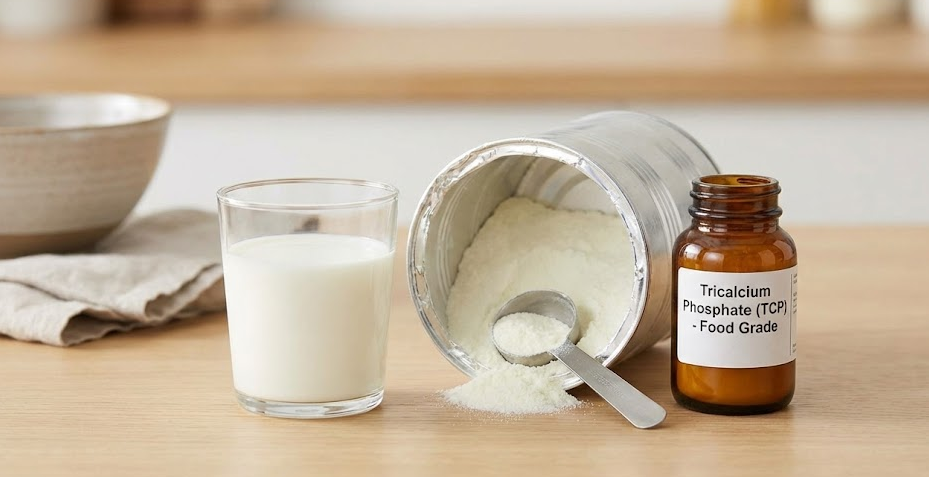
Tricalcium Phosphate is the workhorse when it comes to adding calcium to food products. Its key advantage is that it is not very soluble in water. This means it won’t drastically change the texture or taste of the final product. We often supply our ultra-fine TCP to clients in the dairy industry. They use it to fortify milk powder and infant formula. It provides a smooth mouthfeel and doesn’t clump up. This anti-caking property also makes it very useful in powdered spices, drink mixes, and vending machine powders. It keeps everything free-flowing. The main takeaway is that when your goal is nutritional enrichment or preventing powders from caking, TCP is almost always the right answer. It delivers the minerals without causing unwanted side effects in the manufacturing process.
Key Properties of TCP
| Property | Description | Benefit for Food Production |
|---|---|---|
| Solubility | Low | Does not alter the texture or taste of most foods. |
| Calcium Content | High | Excellent for nutritional fortification without adding volume. |
| Particle Size | Can be ultra-fine | Provides a smooth mouthfeel and prevents grittiness. |
| Flowability | Excellent | Acts as an effective anti-caking agent in dry mixes. |
What About Dicalcium and Monocalcium Phosphate?
Think all calcium phosphates are the same? That assumption can lead to failed batches. Let’s explore two other key types, DCP and MCP, and see how different they are.
Dicalcium Phosphate (DCP) is often used as a polishing agent and a dough conditioner. Monocalcium Phosphate (MCP) is a fast-acting leavening acid in baking. Their solubility and acidity are completely different from TCP, making them suitable for very different food systems.

These two phosphates show just how diverse the “calcium phosphate” family is. Monocalcium Phosphate, or MCP, is a star in the baking world. It reacts quickly with baking soda to produce carbon dioxide gas. This reaction is what makes cakes, muffins, and pancakes rise and become light and fluffy. A baker would never use TCP for this purpose because it doesn’t have the acidic properties needed for leavening. Then there is Dicalcium Phosphate, or DCP. It has a slightly abrasive texture, so it is sometimes used in products that need a polishing agent. In baking, it can also act as a dough conditioner, strengthening the dough structure. You can see how asking for just “calcium phosphate” could get you a leavening agent when you really needed a fortifier. The functions are not interchangeable at all.
Quick Comparison: TCP vs. DCP vs. MCP
| Type | Common Name | Primary Function | Typical Application |
|---|---|---|---|
| TCP | Tricalcium Phosphate | Fortification, Anti-caking | Milk Powder, Spices |
| MCP | Monocalcium Phosphate | Leavening Acid | Cakes, Biscuits, Breads |
| DCP | Dicalcium Phosphate | Dough Conditioning | Some Breads, Cereals |
Why Does the Specific Chemical Name Matter So Much?
Does a simple name mix-up really cause big problems? I’ve seen it nearly cost a major order. Let’s discuss why precision with chemical names is non-negotiable for us.
The specific chemical name and CAS number define the ingredient’s exact properties, like its solubility, pH, and reactivity. A simple request for “calcium phosphate” is too vague. It can result in receiving the wrong product, leading to production failures and financial loss.
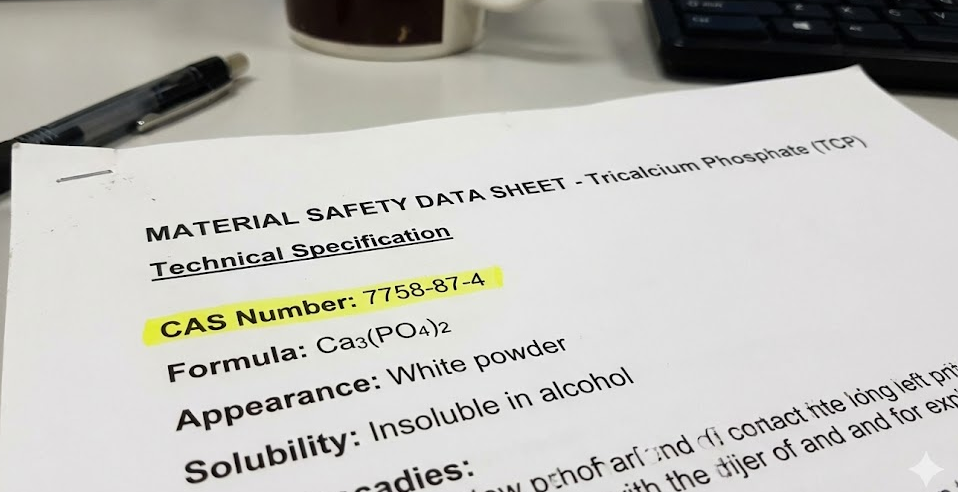
I learned this lesson the hard way early in my career. We had a client who just asked for a bulk shipment of “calcium phosphate.” Based on their industry, we assumed they needed TCP. So, we shipped it. It turned out they needed Monocalcium Phosphate for a new line of baked goods. The TCP we sent was completely useless for their leavening system. It caused a huge delay in their production launch and almost damaged our relationship with them. We were able to fix it, but it was a very stressful situation. From that day on, I made it a strict rule for my team. We never proceed with an order without confirming the exact chemical name and, most importantly, the CAS number. A CAS number is a unique identifier for a specific chemical substance. It removes all ambiguity. It is the language of precision that ensures our clients get exactly what they need for their formula to work.
The Ultimate Identifier
- What it is: A CAS Registry Number is a unique numeric identifier assigned to every chemical substance.
- Why it matters: It eliminates confusion between chemicals with similar names but different structures or functions.
- Our Process: We always ask for and confirm the CAS number with our clients. It is the first step in our technical discussion. This practice protects our clients from costly errors and ensures a successful partnership from the very beginning.
How Do You Choose the Right Calcium Phosphate for Your Food Product?
Choosing the right ingredient feels overwhelming. You need the right function without the guesswork. Let’s break down how to select the perfect calcium phosphate for your specific application.
To choose the right calcium phosphate, first identify your primary goal. Are you fortifying with calcium, leavening a baked good, or conditioning dough? Your goal will point you directly to either TCP for fortification, MCP for leavening, or DCP for conditioning.

The best way to choose the right ingredient is to start with the end in mind. What do you want the ingredient to do in your product? If your main goal is to increase the calcium content of a powdered drink mix, you need something that won’t clump or add a gritty taste. That’s a job for Tricalcium Phosphate (TCP). If you are developing a new pancake mix that needs to be light and airy, you need a fast-acting acid to create bubbles. Monocalcium Phosphate (MCP) is the perfect choice. At GjPhosphate, we see our role as more than just a supplier. We help our clients clarify these basic but critical concepts. We start by asking about their application and their desired outcome. This conversation helps us guide them to the precise ingredient that will deliver the results they need. This focus on technical precision is the foundation of a professional partnership.
Matching the Phosphate to the Process
| Your Goal in Food Production | Recommended Phosphate | Why It Works |
|---|---|---|
| Add Calcium to Powdered Products | Tricalcium Phosphate (TCP) | High in calcium, low solubility, anti-caking. |
| Make Baked Goods Rise | Monocalcium Phosphate (MCP) | Fast-acting leavening acid reacts with baking soda. |
| Improve Dough Strength | Dicalcium Phosphate (DCP) | Acts as a dough conditioner, strengthening gluten. |
| Prevent Caking in Spices/Mixes | Tricalcium Phosphate (TCP) | Excellent flow agent that absorbs moisture. |
Conclusion
The name “calcium phosphate” can mean several things. The most common is TCP, but knowing the specific type you need is critical for success. Precision is key in food production.
[1]: Learn about DCP’s role as a polishing agent and dough conditioner, essential for improving texture and structure in baked goods.
[2]: Discover MCP’s fast-acting leavening properties, vital for making baked goods rise and achieve the desired lightness.
[3]: Explore how TCP is used for calcium fortification and as an anti-caking agent, crucial for enhancing food products without altering taste.
[4]: Understand the benefits of adding calcium to foods, enhancing nutritional value without compromising taste or texture.
[5]: Find out how anti-caking agents like TCP keep powdered products free-flowing, preventing clumping and ensuring quality.
[6]: Explore why low solubility in TCP is advantageous for maintaining the texture and taste of food products.
[7]: Find out how TCP is used to fortify powdered milk, enhancing its nutritional profile without affecting taste.
[8]: Learn how enriching foods with nutrients like calcium can improve health benefits and market appeal.
[9]: Learn about the role of DCP in enhancing dough strength and texture, crucial for quality baking.
[10]: Understand how leavening acids like MCP create the rise in baked goods, essential for texture and volume.
[11]: Discover the chemical reaction between baking soda and MCP that causes baked goods to rise.
[12]: Understand the importance of using exact chemical names to avoid production errors and ensure product quality.
[13]: Discover how a CAS number ensures precision and prevents costly errors in chemical identification and usage.
[14]: Discover how GjPhosphate assists clients in selecting the right calcium phosphate for their specific needs.
[15]: Explore the importance of choosing the right additives to ensure product quality and consumer satisfaction.