

How to choose a good phosphate supplier?
6 Key Tips for Choosing a Phosphate Supplier Advice from a 20-Year Product Manager Table of Contents 1. Evaluate Product Quality Stability 2. Verify Certificates and Documentation Completeness 3. Assess Supply Capacity 4. Evaluate Service Capability 5. Check Price Competitiveness [...]
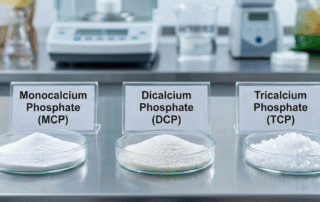
What Is Another Name for Calcium Phosphate?
Confused by the term "calcium phosphate"? Using the wrong type can be a costly mistake. Let's clarify the names to ensure you get the exact ingredient your product needs. The most common other name for calcium phosphate is Tricalcium Phosphate, [...]
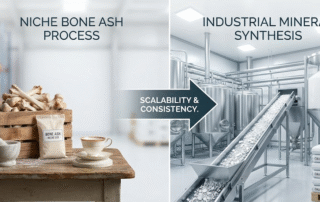
Where do they get calcium phosphate from?
Struggling to find a pure, reliable calcium phosphate source? The origin of your ingredients directly impacts product quality. We'll show you the industrial standard for safety and consistency. The vast majority of commercial calcium phosphate comes from processing high-purity phosphate [...]
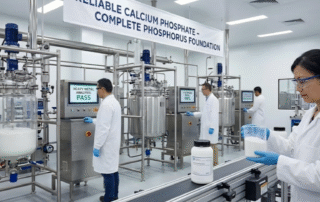
Who makes the best calcium phosphate?
Finding a reliable calcium phosphate supplier[1] is tough. Inconsistent quality can ruin your products and hurt your business. The secret is to look beyond price and choose real experts. Truly reliable calcium phosphate is made by manufacturers with a complete [...]

Citric Acid Basics: Buyer Guide for E330/INS330
This citric acid basics guide is written for manufacturers, importers, and QA teams who need a practical “buying and approval” reference—not a general chemistry lesson. Use it to align naming (E330/INS330), choose the right grade and particle form, and request [...]
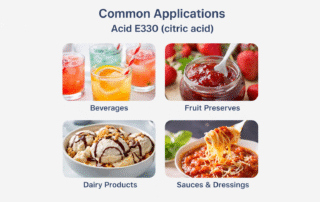
Citric Acid E330 Explained for Buyers: Meaning, Use, and Sourcing
acid e330 is a common buyer and labeling shorthand for citric acid used in food applications. If you are sourcing for manufacturing (beverage, confectionery, sauces, dairy, etc.), the purchasing risk is usually not the name itself—it is whether the supplier’s [...]
