Finding a reliable calcium phosphate supplier[1] is tough. Inconsistent quality can ruin your products and hurt your business. The secret is to look beyond price and choose real experts.
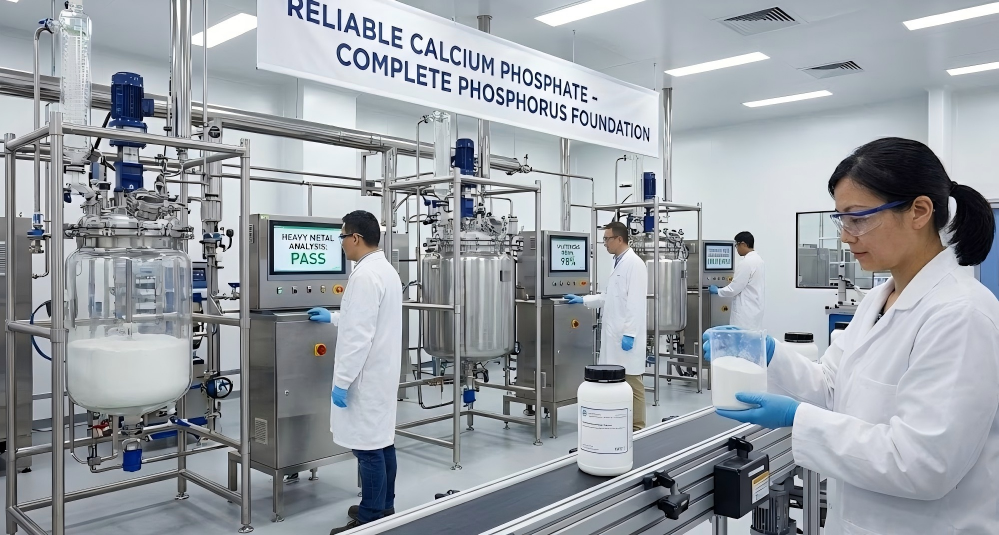
Truly reliable calcium phosphate is made by manufacturers with a complete phosphorus chemical foundation[2]. They control the entire process[3], from raw materials to final product, ensuring stability in heavy metals, whiteness[4], and particle size[5]. This guarantees consistent quality for every batch you receive.
I’ve been in the phosphate business for over ten years. I have seen many buyers make the same mistake by choosing a supplier based on price alone. But the real cost shows up later in production problems and inconsistent results. So, what really separates a great supplier from an average one? Let’s break it down so you can make the right choice for your business every time.
How can you tell a good manufacturer from a basic factory?
Are you worried you might be choosing a simple trader instead of a real manufacturer? This confusion can lead to poor quality, supply chain risks, and a lot of headaches.
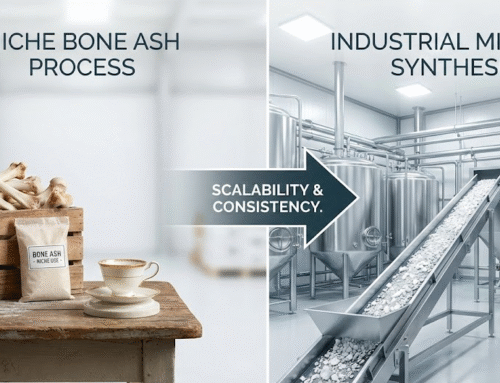
A good manufacturer controls the entire process, from phosphate rock to the final product[6]. They have strong R&D, focus on purification, and manage quality control in-house. A basic factory often just blends or repacks, with little control over the source material.
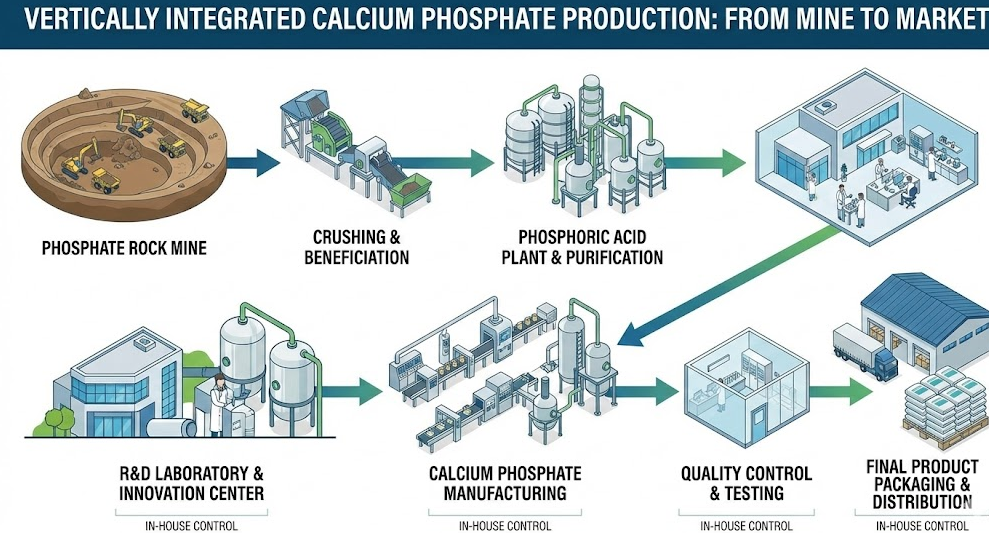
A real manufacturer, like us at GjPhosphate, starts at the source. We are based in Guizhou[7], a region in China rich in high-quality phosphate minerals. This gives us complete control from the very beginning. We don’t just buy intermediate materials from the market. We manage the complex chemical reactions that create calcium phosphate. This step is critical. It allows us to control the purity and the physical properties of the final product with great precision. Basic factories or traders often buy cheaper, inconsistent materials from various sources and just do the final blending or grinding. They cannot guarantee what is inside the bag. I remember visiting a small workshop once. They had bags of raw material from five different suppliers stacked in a corner. How could they possibly promise a consistent product? That is the risk you take with a supplier who doesn’t control their own production process from start to finish.
| Feature | Integrated Manufacturer (like GjPhosphate) | Basic Factory / Trader |
|---|---|---|
| Raw Materials | Direct sourcing from owned or controlled mines, full traceability. | Buys from multiple, often unknown, market sources. |
| Process Control | Manages chemical reactions and purification[8] in-house. | Limited to blending, grinding, or simply repacking. |
| Quality Focus | Consistency of chemical and physical properties. | Focus on basic specifications, often driven by price. |
| Expertise | Deep knowledge of phosphorus chemistry and food applications. | Limited technical depth, focuses more on logistics. |
What quality standards really matter for calcium phosphate?
Do you know which quality metrics to check on a Certificate of Analysis (COA)[9]? Focusing on the wrong numbers can let critical issues slip by, directly affecting your final product’s safety and quality.
Look beyond the basic purity percentage. For food and feed applications, the most critical standards are heavy metal levels[10] (like lead and arsenic), whiteness[4], and particle size[5]. These directly impact product safety, appearance, and performance in your formulation.
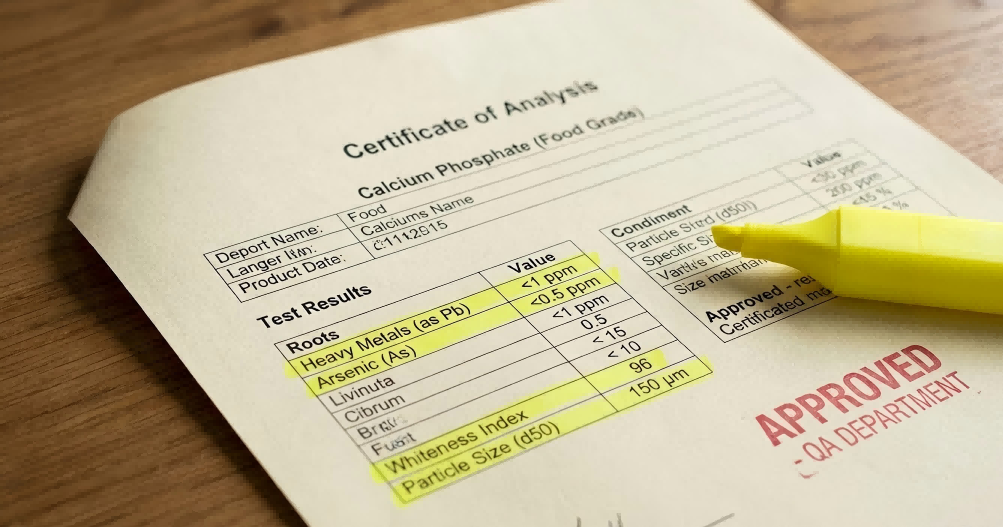
Many customers just look at the main assay, like “Tricalcium Phosphate > 98%”. But the real story is in the details that are often overlooked. In my experience, we obsess over three specific things for our food and feed customers. First, heavy metals. This is non-negotiable for food safety and a primary concern for any reputable food manufacturer. We test every single batch to ensure levels of lead, arsenic, and other metals are well below strict international limits. Second is whiteness[4]. A customer in the dairy industry once told me our product made their processed cheese look brighter and more appealing. That’s because we control the purification process to remove tiny impurities that can cause a grayish or yellowish tint. Third is particle size[5]. This property affects how the product behaves in your application. For a bakery customer, the right particle size[5] determines how quickly their leavening agent reacts. Too fast and the cake collapses; too slow and it doesn’t rise enough. We ensure our particle size[5] distribution is stable batch after batch.
| Quality Standard | Why It’s Critical | What a Good Supplier Controls |
|---|---|---|
| Heavy Metals (Pb, As) | Essential for food and feed safety, and for meeting regulatory compliance. | Rigorous purification processes and mandatory batch testing. |
| Whiteness | Affects the visual appeal of the final food product, especially in dairy and bakery. | Advanced removal of color-causing impurities during production. |
| Particle Size | Impacts solubility, texture, mouthfeel, and chemical reaction rate. | Precise grinding, milling, and sieving processes for consistency. |
Why is stable supply and documentation just as important as quality?
You found a supplier with a good product, but their deliveries are always late and the paperwork is a mess. This creates production delays, import headaches, and stress for your team.
A great product is useless if you can’t get it consistently. A reliable partner ensures stable, on-time delivery and provides all necessary documentation, like COAs, certifications, and traceability records[12]. This makes your logistics and compliance smooth and predictable.
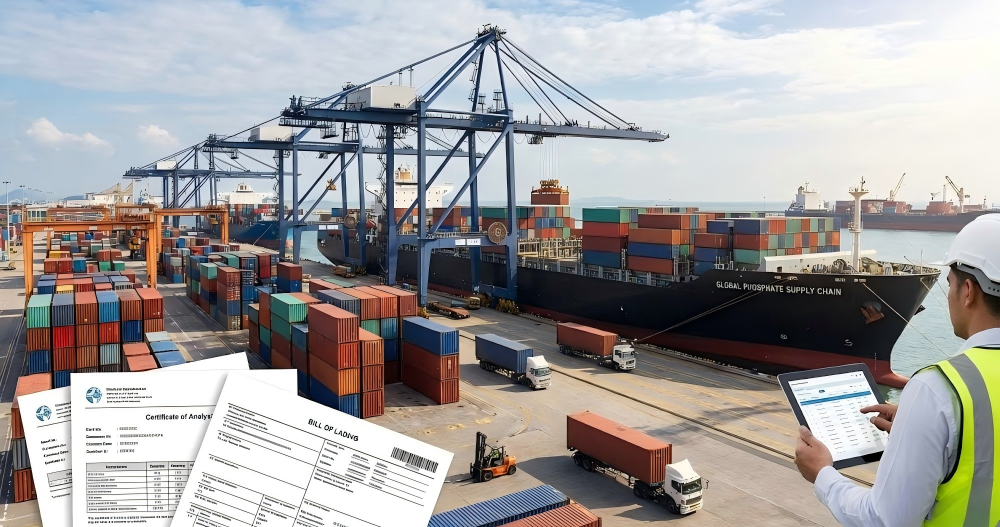
For more than 15 years, we have been exporting our products around the world. We learned very early that a great product is only half the battle. Our customers in Europe, the Middle East, and the Americas need more than that. They need to know their shipment will arrive on time, every time. That is why we built a smart and efficient logistics system. Our location in Guizhou[7] gives us access to abundant phosphate resources for stable production. But we also operate our own export-friendly warehouses near major Chinese ports like Huangpu, Lianyungang, and Chongqing. This strategy cuts down delivery times and reduces logistics risks. Then there is the paperwork. A missing certificate or an incorrect document can hold up a container at customs for weeks. We prepare everything for you in advance. This includes a detailed COA for every batch, full traceability documents, and the certifications you need, such as ISO, HALAL, or BRC. We see ourselves as part of your team, making sure your supply chain is the last thing you need to worry about.
Conclusion
Choosing the right calcium phosphate supplier[1] is key. Look for a true manufacturer with deep expertise, a focus on critical quality standards, and a commitment to stable, documented delivery.
- Discovering a reliable supplier ensures consistent product quality, which is crucial for maintaining your business’s reputation and success. ↩
- Understanding this foundation helps you identify manufacturers who control the entire production process, ensuring product consistency and quality. ↩
- Manufacturers who control the process can ensure product stability and quality, reducing risks of contamination and inconsistencies. ↩
- Whiteness impacts the visual appeal of food products, making it a critical quality factor for industries like dairy and bakery. ↩
- Particle size affects solubility and reaction rates, influencing the performance and texture of the final product in various applications. ↩
- Understanding this process helps in selecting suppliers who manage every step, ensuring high-quality and consistent products. ↩
- Guizhou’s rich phosphate resources provide manufacturers with high-quality raw materials, ensuring better control over product quality. ↩
- These processes are crucial for ensuring the purity and effectiveness of calcium phosphate, impacting its application in various industries. ↩
- Knowing what to check in a COA ensures you receive a product that meets safety and quality standards, crucial for food and feed applications. ↩
- Monitoring heavy metal levels is essential for food safety and regulatory compliance, protecting consumer health and meeting legal standards. ↩
- A stable supply ensures consistent production schedules, reducing delays and maintaining product availability for your business. ↩
- Traceability records ensure accountability and transparency, helping you track product origins and maintain quality assurance. ↩