This citric acid basics guide is written for manufacturers, importers, and QA teams who need a practical
“buying and approval” reference—not a general chemistry lesson. Use it to align naming (E330/INS330), choose the right grade
and particle form, and request the documents and spec points that reduce delays during supplier onboarding.
1) Citric acid basics in one line (what buyers mean)
Citric acid is a widely used food acid and formulation tool. In buyer language, “citric acid basics” means:
how it is named (E330/INS330), how it is specified (grade + limits), and how it is sourced (documents + consistency).
When procurement teams search citric acid basics, they usually need fast clarity on three points:
(1) what to call it in a spec, (2) what to control before ordering, and (3) what documents keep shipments from being held up.
That is why this guide is structured as a listicle/how-to reference that can be shared internally or used to brief a supplier.
2) E330 vs INS 330 vs “citric acid” (naming you must align)
One of the most common buyer mistakes is assuming that naming is “obvious.” In international trade, different markets and
different documents can reference the same ingredient in different ways. You should align naming early so your RFQ, label plan,
and import file are consistent.
2.1 The three labels you will see most often
- Citric acid: the ingredient name used in most technical documents and many labels.
- E330: EU-style additive code used in ingredient lists and some buyer shorthand.
- INS 330: Codex-style code commonly seen in global trade discussions and some regulatory mapping.
2.2 Buyer tip: match naming to your document type
RFQ & Purchase Contract
Use “citric acid (E330 / INS 330)” once in the first line, then use “citric acid” consistently afterward.
Label review / Customer spec
Use the format required by your destination market and your customer’s labeling policy (name vs code vs both).
Practical rule: If your team uses “E330” in the spec title, still write “citric acid” in the body so suppliers do not quote the wrong item or form.
3) Food grade vs pharma vs technical (how to choose quickly)
For most food and beverage manufacturing, the default is food grade citric acid. The key is to state the
grade clearly so you do not receive quotes that are not comparable.
3.1 Quick selection framework
- Food grade: standard choice for food processing and beverage applications.
- Pharma grade: selected when the downstream use requires pharmaceutical controls or pharmacopeia compliance.
- Technical grade: used for non-food applications; avoid in food RFQs.
If you are building a multi-market portfolio, keep separate SKUs and separate specs. Mixing grade requirements in one RFQ is
one of the fastest ways to slow down qualification and create “apples-to-oranges” pricing.
4) Powder vs granular (particle form that affects production)
Buyers often focus on purity first and forget that particle form can drive real operational differences in
blending, dusting, and dissolution behavior. For many factories, the “right” form is the one that fits the line and reduces
handling problems.
4.1 When powder is preferred
- Fast dissolution needs (especially where mixing is strong and dust control is available).
- Precise dosing in small batches or lab-scale formulation.
- Applications where rapid pH adjustment is required.
4.2 When granular is preferred
- Reduced dusting and easier handling in warehouses or manual feeding.
- More stable flowability in certain blending operations.
- Facilities aiming to reduce airborne powder in the process area.
5) Key specs buyers should lock before comparing prices
To get comparable offers (and to avoid later rejection), set a clear spec window before you negotiate price. The point is not
to copy a competitor’s spec blindly, but to define what your QA team will accept and what your process needs.
5.1 The “buyer-standard” spec fields
| Spec field | Why buyers care | What to do in RFQ |
|---|---|---|
| Assay / purity | Quality baseline and consistency | Set a minimum limit and require COA evidence |
| Moisture / loss on drying | Storage stability and caking risk | Define maximum and storage conditions |
| Impurities (incl. heavy metals) | Compliance and customer limits | State acceptance limits; request typical COA |
| Particle form (powder/granular) | Handling, dust, dissolution | Specify required form (or request separate quotes) |
| Packaging | Damage risk, handling cost, warehouse fit | Define bag type, liner expectations, palletization |
Best practice: Ask for a typical COA first. If the typical COA does not fit your window, you will waste time later no matter how attractive the price is.
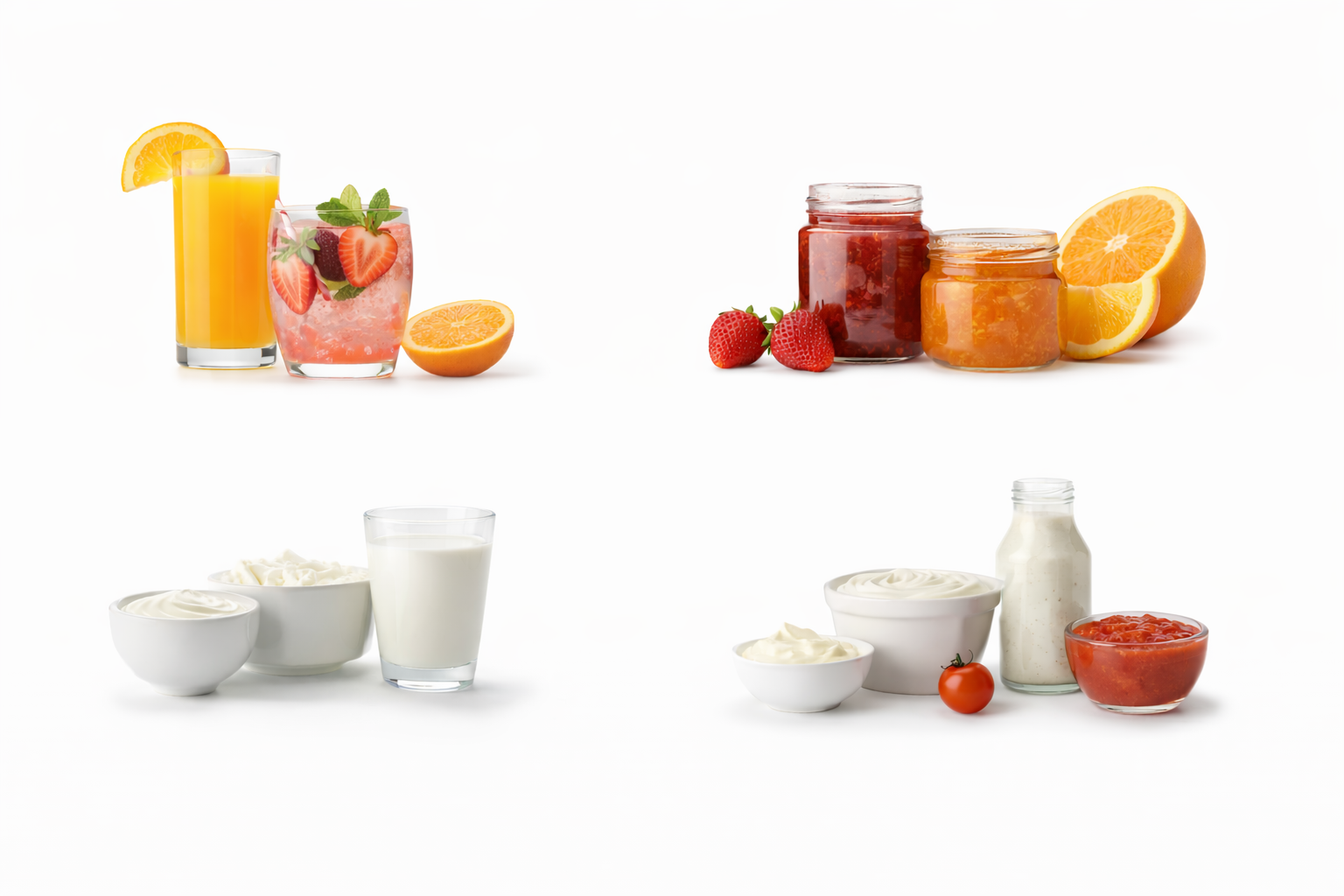
6) Top end-use categories (what “Google expects” to see)
List-style content that performs well in search typically includes clear, high-level categories. Below is a buyer-oriented,
non-overpromising overview you can reuse in internal slides or supplier alignment calls.
6.1 Beverage and drink mixes
Used to adjust acidity and support consistent flavor profiles. Buyers typically focus on fast dissolution and stable storage.
6.2 Confectionery and sweets
Supports tartness and balanced taste. Granular forms may be preferred in certain blending operations to reduce dust.
6.3 Sauces, dressings, and seasonings
Helps standardize acidity targets. Buyers should align the material form with the plant’s mixing intensity and dosing method.
6.4 Dairy and processed dairy applications
Used where acidity management is part of formulation control. Procurement should validate suitability through plant trials.
6.5 Preserves and fruit preparations
Often selected to support acidity consistency in fruit-based formulations. Buyers typically evaluate cost-in-use and batch stability.
7) How to write an RFQ that gets comparable offers
A strong RFQ does two things: it reduces supplier back-and-forth, and it forces quotations to be comparable. Use this structure
to make your citric acid sourcing faster and easier to audit.
7.1 RFQ template (copy/paste)
Please quote citric acid (E330 / INS 330), food grade.
Specify particle form (powder or granular), your standard specification limits,
typical COA, SDS, TDS, packaging (bag type + liner), MOQ, lead time,
and shipping terms (Incoterms + destination port).
7.2 Comparison checklist (what to standardize)
- Same grade and particle form across all quotes
- Same packaging unit (e.g., 25 kg bags) and palletization assumptions
- Same destination port and incoterms (FOB/CFR/CIF, etc.)
- Same document set expectations (COA per shipment + SDS/TDS)
8) Supplier approval checklist (documents + batch control)
In B2B reality, approval is won by consistency and documentation discipline. Use this list to shorten onboarding time and
reduce shipment holds.
8.1 Documents buyers commonly request
- Typical COA (qualification) + COA per shipment (release)
- SDS for handling and transport compliance
- TDS describing spec limits, packaging, and shelf life
- Traceability basics (batch/lot identification and labeling consistency)
8.2 Batch consistency questions (simple but effective)
- Can you provide COAs from multiple recent batches for key limits?
- What is your change-control approach for raw materials or process adjustments?
- How do you label lots and how is traceability handled from production to shipment?
9) Packaging, storage, shelf life, and typical logistics notes
Many “quality” complaints are actually packaging and storage problems. Buyers should treat packaging and storage as part of
the specification, especially in humid climates or long transit routes.
9.1 Packaging details to confirm
- Bag size (commonly 25 kg) and whether an inner liner/moisture barrier is used
- Palletization method and container loading expectations
- Warehouse handling requirements (manual vs mechanical feeding)
9.2 Storage guidance (buyer-friendly)
- Store in a cool, dry place; keep packaging sealed when not in use
- Prevent moisture exposure to reduce caking risk
- Use FIFO and maintain clear lot traceability at the warehouse level
10) Common mistakes (and how to avoid buyer delays)
10.1 Mistake: buying by name only
Writing “citric acid” without grade, form, and key limits leads to non-comparable quotations and QA rework.
10.2 Mistake: skipping the typical COA
A typical COA is the fastest “fit check” you can do. If it does not match your window, pricing discussions are premature.
10.3 Mistake: forgetting particle form
Powder vs granular affects dusting, flowability, and dissolution behavior. Specify it up front to prevent production issues.
10.4 Mistake: not standardizing incoterms and destination
Without a standardized destination and incoterms, quotes are not comparable and procurement decisions become noisy.
11) Related reading links
- citric acid e330
- acid e330
- citric acid 330
- acid regulator 330
- food acid 330
- acidulant citric acid
- citric acid msg
If you want to drive inquiries, add a single CTA here:
Contact us for quotation and documentation.
12) FAQ
12.1 Is E330 the same as INS 330?
In buyer practice, both terms commonly refer to citric acid in different naming systems. For sourcing, always confirm grade and
your internal acceptance limits.
12.2 What is the fastest way to qualify a supplier?
Request a typical COA and TDS, compare them to your limits, then confirm COA-per-shipment format and lot traceability before you finalize commercial terms.
12.3 What is one authoritative external reference I can cite?
For global additive category alignment and trade discussions, Codex GSFA is widely used as a reference database:
Codex GSFA Online Database (FAO/WHO).