Struggling to find a pure, reliable calcium phosphate source? The origin of your ingredients directly impacts product quality. We’ll show you the industrial standard for safety and consistency.
The vast majority of commercial calcium phosphate comes from processing high-purity phosphate rock1.
This mineral is mined, purified, and reacted with a calcium source under strict controls. This method ensures the stability and safety required for food, feed, and pharmaceutical applications, unlike older, less scalable methods.
As the CEO of a company that lives and breathes phosphates, I get this question a lot. The journey from a raw mineral in the ground to a highly pure food additive is fascinating and complex. It is a global operation that requires precision at every step. Let me walk you through exactly how it is done and why the details matter so much for your final product.
How is Calcium Phosphate Made from Minerals?
Worried about impurities in your ingredients? The mineral synthesis process2 is designed for purity. But if not done right, it can introduce contaminants. Let’s look at the correct way.
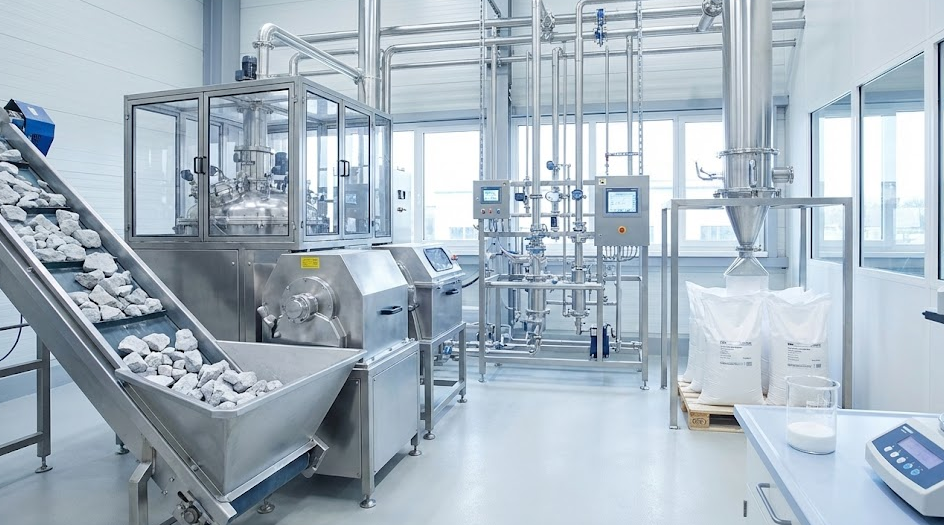
Calcium phosphate is made by first mining phosphate rock. The rock is then crushed and purified to create phosphoric acid. This acid is carefully reacted with a calcium source, like calcium carbonate (limestone). The resulting product is then purified, dried, and milled to meet specific grade requirements.
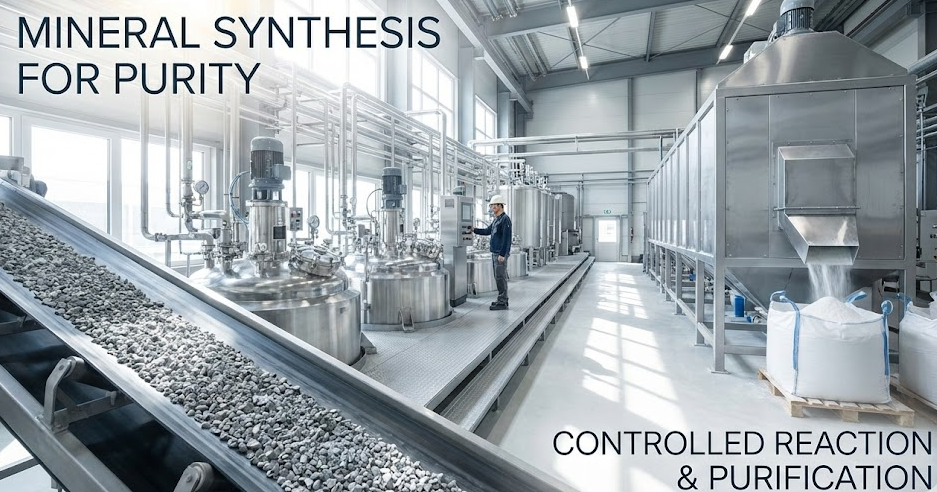
Our process begins deep in the earth. High-quality phosphate rock is a finite resource, concentrated in specific regions like Morocco and my home base in Guizhou, China. This is the starting point for almost all food-grade phosphates3 today.
Step 1: Mining and Purifying the Ore
First, the raw phosphate ore is mined. This ore is not pure enough to be used directly. It contains sand, clay, and other minerals. So, it goes through a process called flotation, which separates the valuable phosphate from the waste material. The result is a much purer phosphate concentrate. This step is critical because the quality of the raw material determines the quality of the final product.
Step 2: Creating Phosphoric Acid
Next, we convert the solid phosphate concentrate into liquid phosphoric acid. This is usually done by reacting it with sulfuric acid. This “acid digestion4” step is where much of the purification happens. It is a complex chemical reaction that we control very carefully to remove unwanted elements.
Step 3: Synthesis with a Calcium Source
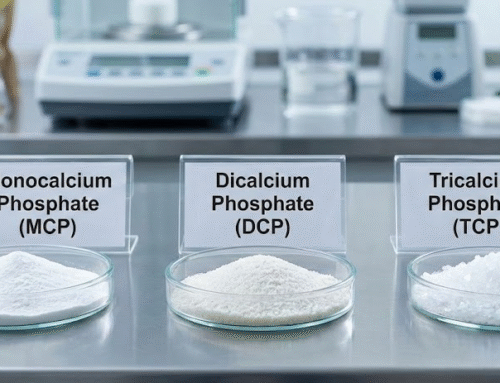
| Calcium Source | Resulting Phosphate Type | Common Use Case |
|---|---|---|
| Calcium Hydroxide | Tricalcium Phosphate (TCP) 5 |
Food Additive, Anti-caking |
| Calcium Carbonate | Dicalcium Phosphate (DCP) 6 |
Animal Feed, Supplements |
| Calcium Oxide | Monocalcium Phosphate (MCP) 7 |
Leavening Agent in Baking |
By controlling this reaction, we can create different phosphates with different functions. This mineral-based route is the backbone of the industry because it is efficient, scalable, and allows for incredible purity control.
Is Calcium Phosphate Still Made from Animal Bones?
Hear that calcium phosphate comes from bones? This outdated idea causes confusion about safety and sourcing. The reality for industrial supply is very different and much more controlled.
Yes, but it is a niche process, not the industrial standard. Bone ash is used for things like high-end bone china or specific dietary supplements. For large-scale food production, the mineral-based synthesis route is dominant because it offers superior purity, consistency, and scalability for global supply.
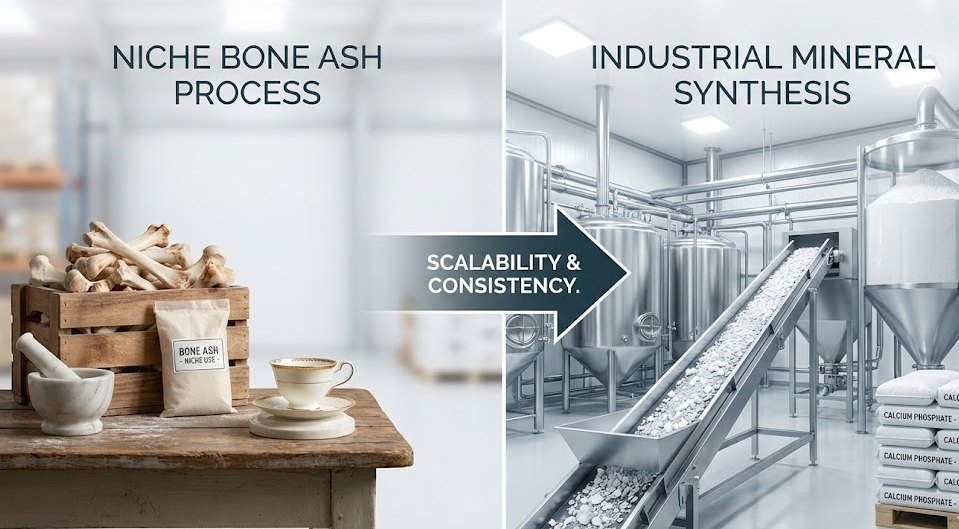
Historically, using animal bones was a common way to get calcium phosphate. People would burn bones at very high temperatures in a process called calcination. This would leave behind a white powder called bone ash8, which is mostly calcium phosphate. I sometimes think of it as a form of “urban mining.” This method still exists today, but it is no longer the mainstream choice for the food industry, for several important reasons.
Why It’s Not Mainstream
The main issue is a lack of control and scale.
- Scalability: The global demand for calcium phosphate in food, toothpaste, and medicine is massive. The supply of animal bones is simply too small and inconsistent to meet this demand. In contrast, phosphate rock reserves9 are vast and provide a steady, predictable source.
- Purity Control: It is much harder to control impurities when your raw material is biological. Bones can contain variable levels of other elements. The mineral synthesis route, on the other hand, involves multiple, deliberate purification steps. This gives us precise control over the final product’s purity, which is essential for food safety.
- Cost: At an industrial scale, processing minerals is more cost-effective.
Today, bone ash8 is used in specialty applications where its unique properties are valued. It gives bone china its famous translucency and strength. It is also used in some “whole-food” supplements. But for my customers in large-scale food manufacturing, the mineral route is the only way to guarantee the safety, consistency, and volume they need.
What Makes Food-Grade Calcium Phosphate Different?
All calcium phosphates look the same, right? Wrong. The difference between a technical grade and a food grade can make or break your product’s safety and regulatory compliance.
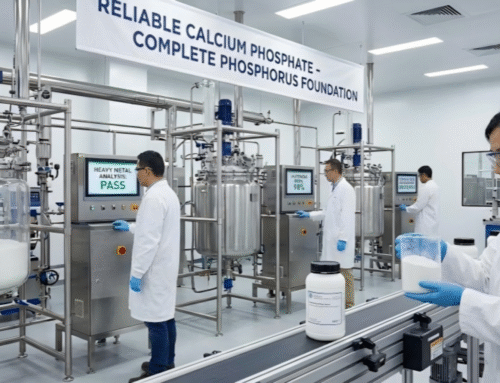
Food-grade calcium phosphate is defined by its exceptional purity. It must meet strict legal limits for heavy metals like lead, arsenic, and cadmium. The entire manufacturing process, from raw material selection to final packaging, is designed to prevent contamination and ensure it is safe for human consumption.
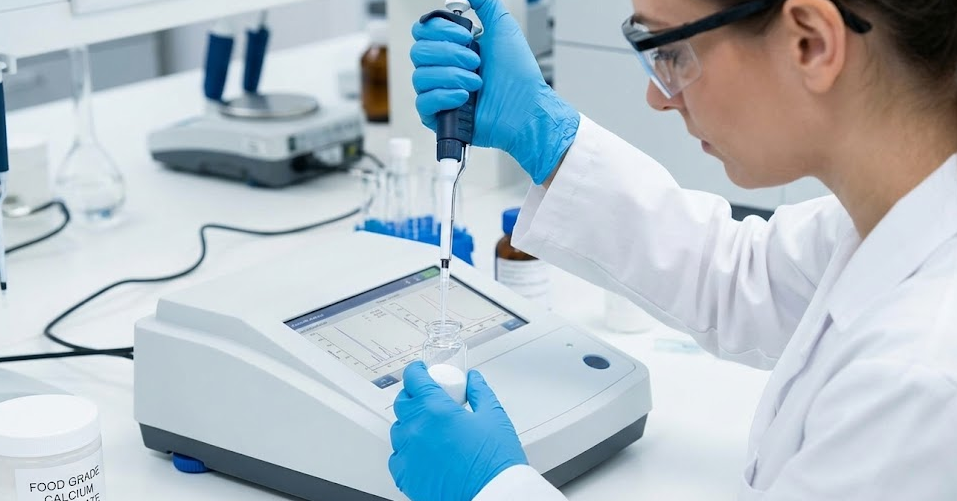
When we talk about food-grade, we are talking about one thing above all else: safety. The white powder might look the same, but the difference is on a microscopic level.
The Heavy Metal Challenge
Phosphate ore in the ground naturally contains trace amounts of heavy metals. These include lead, arsenic, cadmium, and mercury. These elements are harmful to human health. The entire purpose of the refining and synthesis process is to remove these contaminants to almost undetectable levels. This is the main difference between a cheap technical-grade phosphate and a high-quality food-grade product. We follow strict international standards.
| Contaminant | Technical Grade (Example) | Food Grade (Strict Limit) |
|---|---|---|
| Lead (Pb) | < 50 ppm | < 2 ppm |
| Arsenic (As) | < 20 ppm | < 3 ppm |
| Cadmium (Cd) | < 10 ppm | < 1 ppm |
Beyond Purity: Our Technological Edge
At Guizhou Lvyin Biotech10, we believe purity is just the starting line. The real magic happens when we apply technology to improve the ingredient’s function. We use advanced techniques like bio-enzymatic hydrolysis11 and crystallization control12. This means we are not just mixing chemicals. We are using biological processes and precise controls to influence the physical structure of the phosphate crystals. For example, the Dicalcium Phosphate we supply for high-end infant formula is not just pure. Its structure is optimized for better absorption in the body. This is our competitive advantage, our “moat.” We take a basic mineral and turn it into a high-performance functional ingredient.
Why Does the Supply Chain for Calcium Phosphate Matter?
Facing production delays due to ingredient shortages? A weak supply chain can halt your entire operation. A reliable partner manages logistics from the mine to your factory door.
A strong supply chain ensures consistent quality and on-time delivery. It involves sourcing from reliable mines, managing international shipping, and maintaining port-side warehouses. This logistical strength prevents production disruptions for food manufacturers and guarantees a steady supply of certified, high-quality ingredients.
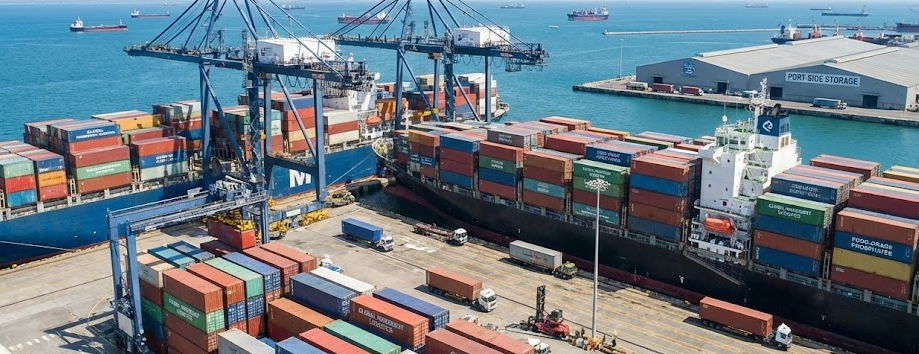
As a CEO, a huge part of my job is managing risk. In a global business like ours, the supply chain is one of the biggest areas of risk and opportunity. A product is only as good as your ability to get it to the customer, on time and in perfect condition.
From Mine to Market
Our supply chain is something I am very proud of. It is built for efficiency and reliability.
- Sourcing: We are located in Guizhou, one of China’s most phosphate-rich regions13. This gives us direct access to high-quality raw materials and allows us to oversee the very first step of the process.
- Manufacturing: Our advanced production facilities are located close to these resources. This reduces transportation costs and our carbon footprint.
- Logistics: This is where we really help our international customers. We operate dedicated warehouses14 near major Chinese ports like Lianyungang, Huangpu, and Chongqing. This is not an accident. This strategy allows us to ship products quickly and efficiently to our customers in the Middle East, Europe, America, and Southeast Asia. It reduces lead times and improves logistical efficiency.
The Importance of Reliability
My customers are food manufacturers. They run complex operations on tight schedules. They cannot afford to stop a production line because a shipment of a key ingredient is late. Our robust supply chain is our promise of reliability to them. We handle the complexities of quality control, documentation, and global shipping. This lets our customers focus on what they do best: making excellent food products for people around the world.
Conclusion
Calcium phosphate comes from purified minerals, not bones, for industrial use. Purity, technology, and a strong supply chain are key to delivering a safe and reliable product.
- Understanding the uses of high-purity phosphate rock can help you appreciate its importance in producing safe and reliable calcium phosphate.
↩ - Learn how the mineral synthesis process is designed to eliminate impurities, ensuring high-quality calcium phosphate for various applications.
↩ - Exploring food-grade phosphates will reveal their critical role in ensuring product safety and compliance in the food industry.
↩ - Exploring acid digestion will reveal how this step purifies phosphate concentrate, crucial for producing high-quality calcium phosphate.
↩ - Learn about the applications of TCP, a versatile calcium phosphate type used in food additives and anti-caking agents.
↩ - Discover the role of DCP in animal nutrition and supplements, highlighting its importance in the agricultural industry.
↩ - Explore the benefits of MCP in baking, where it acts as a leavening agent, enhancing the texture and quality of baked goods.
↩ - Investigate the niche applications of bone ash, such as in bone china and specific dietary supplements, to understand its unique properties.
↩ - Discovering the locations of phosphate rock reserves can provide insights into global supply chains and resource availability.
↩ - Learn about the technological advancements and competitive advantages provided by Guizhou Lvyin Biotech in the phosphate industry.
↩ - Discover how bio-enzymatic hydrolysis enhances the functionality of calcium phosphate, improving its absorption and performance.
↩ - Explore how crystallization control techniques optimize the physical structure of calcium phosphate, enhancing its effectiveness.
↩ - Discover the regions rich in phosphate resources, crucial for understanding global production and supply dynamics.
↩ - Explore how dedicated warehouses near major ports enhance logistical efficiency and reduce lead times for phosphate products.
↩