
Phone: 0086 851 83799686 | 0086 851 85916246|sales@gjphosphate.com

How to choose a good phosphate supplier?

6 Key Tips for Choosing a Phosphate Supplier Advice from a 20-Year Product Manager Table of Contents 1. Evaluate Product Quality Stability 2. Verify Certificates and Documentation Completeness 3. Assess Supply Capacity 4. Evaluate Service Capability 5. Check Price Competitiveness 6. Confirm Customization Capability Summary: How to Choose a Long-Term Phosphate Supplier? Final Note Footnotes [...]
2026-03-20T09:06:32+00:00

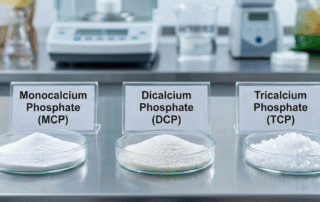
What Is Another Name for Calcium Phosphate?

Confused by the term "calcium phosphate"? Using the wrong type can be a costly mistake. Let's clarify the names to ensure you get the exact ingredient your product needs. The most common other name for calcium phosphate is Tricalcium Phosphate, often abbreviated as TCP. But this is just one type. The term can also refer [...]

2026-02-11T06:59:28+00:00

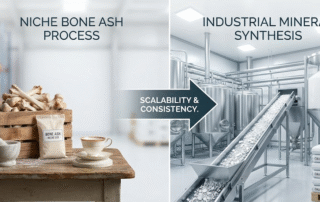
Where do they get calcium phosphate from?

Struggling to find a pure, reliable calcium phosphate source? The origin of your ingredients directly impacts product quality. We'll show you the industrial standard for safety and consistency. The vast majority of commercial calcium phosphate comes from processing high-purity phosphate rock1. This mineral is mined, purified, and reacted with a calcium source under strict controls. [...]

2026-02-09T10:06:13+00:00

Who makes the best calcium phosphate?

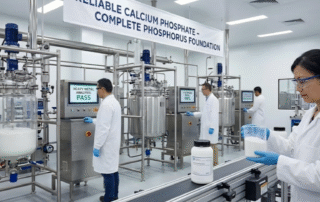
Finding a reliable calcium phosphate supplier[1] is tough. Inconsistent quality can ruin your products and hurt your business. The secret is to look beyond price and choose real experts. Truly reliable calcium phosphate is made by manufacturers with a complete phosphorus chemical foundation[2]. They control the entire process[3], from raw materials to final product, ensuring [...]

2026-02-07T08:05:17+00:00

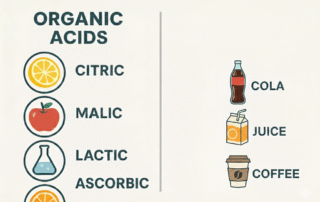
Citric Acid Basics: Buyer Guide for E330/INS330

This citric acid basics guide is written for manufacturers, importers, and QA teams who need a practical “buying and approval” reference—not a general chemistry lesson. Use it to align naming (E330/INS330), choose the right grade and particle form, and request the documents and spec points that reduce delays during supplier onboarding. Use-case: supplier evaluation, specification [...]

2026-01-19T09:45:06+00:00

Citric Acid E330 Explained for Buyers: Meaning, Use, and Sourcing

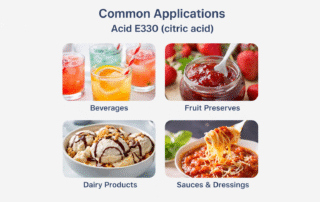
acid e330 is a common buyer and labeling shorthand for citric acid used in food applications. If you are sourcing for manufacturing (beverage, confectionery, sauces, dairy, etc.), the purchasing risk is usually not the name itself—it is whether the supplier’s specification limits and shipment documents match your QA and customer requirements. This guide explains what [...]

2026-01-21T03:11:53+00:00

Citric Acid (E330) Specifications & Buying Guide

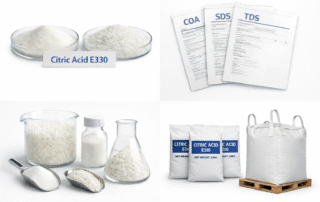
If you are sourcing citric acid (E330) for food manufacturing, the fastest route to smooth approval is aligning grade, key specs, granulation, documentation (COA/SDS/TDS), and export compliance before you request pricing. This guide is written for procurement and QA teams who want fewer delays and more reliable supplier comparisons. Request a Quote / Inquiry Request [...]

2026-01-15T08:53:51+00:00

Phosphate Blend for Frozen Shrimp

Contents: Overview: Moisture Loss and Yield Challenges in Frozen Shrimp Why Frozen Shrimp Loses Moisture During Processing Why Single Phosphates Are Not Enough What Is a Phosphate Blend for Frozen Shrimp? How Phosphate Blends Increase the Weight of Frozen Shrimp Reducing Thaw Loss and Drip Loss in Frozen Shrimp Application of Phosphate Blend in Frozen [...]

2025-12-31T02:19:05+00:00

Frozen Shrimp Moisture Loss During Transport & Cooking: How to Reduce Thaw Drip and Improve Yield with the Right Weight Gained Agent

Frozen shrimp products (especially IQF shrimp and block frozen shrimp) often suffer from moisture loss across the full value chain—processing, freezing, long-distance transport, thawing, and finally cooking. The result is familiar to seafood buyers and processors: lower yield, dry texture, visible drip in the package, and inconsistent eating quality. The good news is that moisture [...]

2025-12-31T02:24:00+00:00

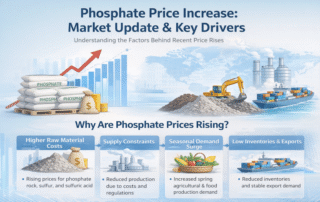
Why Have Phosphate Prices Increased Recently?

Recently, phosphate prices have risen significantly. Many buyers are asking why this has happened and whether the increase is temporary or structural. In reality, the current price increase is driven by a combination of higher raw material costs, supply-side constraints, rising downstream demand, and structural changes in end-use industries. Below is a detailed explanation of [...]

2025-12-18T08:17:56+00:00

Where to Buy Sodium Acetate?

Where Can You Buy Sodium Acetate? If you are searching for where to buy sodium acetate, you are likely comparing suppliers based on price, quality, documentation, and delivery reliability. Sodium acetate is widely used in food processing, pharmaceuticals, and industrial manufacturing, which means buyers must source from suppliers who understand both regulatory requirements and international [...]

2025-12-18T07:54:51+00:00

How to Choose an Acidity Regulator for Food

Acidity regulator choice is one of the most important formulation decisions in modern food processing. The right system will quietly stabilise pH, support flavour and microbiological safety, protect colour and texture, and even reduce overall cost in use. The wrong one can cause harsh sourness, protein precipitation, syneresis, weak preservation and label or regulatory challenges. [...]

2025-12-18T09:45:06+00:00

STPP for Meat and Seafood: Buyer’s Processing Guide

Sodium tripolyphosphate (STPP, E451(i)) is one of the most powerful functional phosphates in modern food processing.But “STPP” is not a single uniform product: meat plants and seafood factories often need different bulk densities, dissolution speeds and performance profiles. If buyers only consider price and “food grade STPP ≥ 95%”, they can easily select the wrong [...]

2025-12-19T03:38:26+00:00

Phosphate-Free Seafood Additive: Buyer’s Technical Guide

Phosphate-free seafood additive solutions are increasingly required in premium export markets, even though traditional phosphate systems remain the backbone of global seafood processing.For more than 40 years, phosphates have enhanced water retention, improved texture, increased yield, prevented thawing loss, and maintained firmness in shrimp, fish fillets, squid, scallops, and surimi.While phosphates continue to be the [...]

2025-12-19T05:51:53+00:00

Fast Soluble STPP vs Normal Food Grade STPP: What Buyers Need to Know

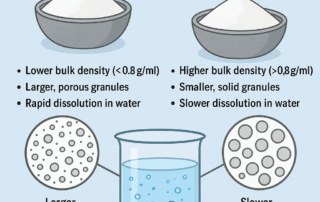
On specification sheets, both products may simply be described as “Sodium Tripolyphosphate (STPP, E451(i))”. But in real food plants, fast soluble STPP and normal food grade STPP behave very differently – especially in cold-water brines and high-speed processing lines. This guide explains the functional role of STPP in food, how bulk density and particle structure [...]

2025-12-19T05:54:29+00:00

Monopotassium Phosphate vs Dipotassium Phosphate: Key Differences

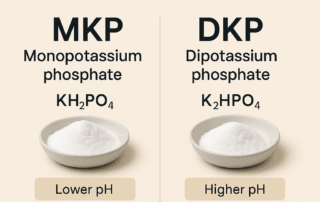
Monopotassium phosphate (MKP, KH₂PO₄) and dipotassium phosphate (DKP, K₂HPO₄) look very similar on paper: both are potassium phosphates, both supply K and P, and both are widely used in food, beverage, agriculture and industrial formulations. However, the two salts behave very differently in solution. One is acidic, the other is alkaline. That single difference in [...]

2025-11-28T02:01:06+00:00

Monopotassium Phosphate Price Differences Explained

On paper, the quotation says “Monopotassium Phosphate, MKP, KH₂PO₄”. The product name is the same, the chemical formula is the same, and even the assay value looks similar across vendors. Yet one supplier’s price is dramatically lower than another’s. Is someone overcharging, or is something else going on behind the scenes? In reality, MKP is [...]

2025-11-24T08:20:21+00:00

How to Choose Food Grade Dipotassium Phosphate (DKP): A Quality Guide for Purchasing Managers

Food grade dipotassium phosphate (DKP, E340(ii)) is widely used as a pH regulator, buffering agent, stabilizer and potassium source in beverages, dairy, bakery and nutrition products. For purchasing and quality teams, the priority is not the lowest price, but securing stable, compliant and highly soluble DKP that protects product clarity, taste and regulatory compliance. Contents [...]

2025-11-20T06:31:28+00:00
Go to Top