Sodium dihydrogen orthophosphate is a food grade sodium phosphate also known as monosodium phosphate, monobasic sodium phosphate, sodium acid phosphate or MSP. In food additive labeling, it is identified as E339(i) or INS 339(i).
For food manufacturers, sodium dihydrogen orthophosphate is mainly used as an acidity regulator, buffering agent, sequestrant, stabilizer and phosphate source. It can also support leavening systems, processed foods, dairy products, beverages and water-based food formulations depending on the final application.
For importers, distributors and food factories, the key is to choose the correct grade and form, such as anhydrous, monohydrate or dihydrate monosodium phosphate, and to confirm the specification, COA, heavy metal limits, food grade documents and export packaging before purchase.
This guide explains what sodium dihydrogen orthophosphate is, how it differs from other E339 sodium phosphates, where it is used, and what buyers should check before sourcing from a supplier.
What Is Sodium Dihydrogen Orthophosphate?
Sodium dihydrogen orthophosphate is an inorganic sodium salt of phosphoric acid. It contains sodium ions and dihydrogen phosphate ions. The most common chemical formula is NaH2PO4.
In commercial purchasing, the same product may be called by different names. Buyers should understand these names to avoid confusion during quotation, customs documentation and product approval.
| Item | Information |
|---|---|
| Common Name | Monosodium Phosphate |
| Full Chemical Name | Sodium Dihydrogen Orthophosphate |
| Common Abbreviation | MSP |
| Other Names | Monobasic sodium phosphate, sodium acid phosphate, sodium biphosphate |
| E Number / INS Number | E339(i) / INS 339(i) |
| CAS No. | 7558-80-7 for anhydrous monosodium phosphate |
| Molecular Formula | NaH2PO4 |
| Appearance | White crystalline powder or granules |
| Solubility | Soluble in water, insoluble in organic solvents |
| Main Food Functions | Acidity regulator, buffer, sequestrant, stabilizer and phosphate source |
Product page: Monosodium Phosphate E339(i)
Is Sodium Dihydrogen Orthophosphate the Same as Monosodium Phosphate?
Yes. Sodium dihydrogen orthophosphate and monosodium phosphate usually refer to the same sodium phosphate ingredient. In food additive classification, it belongs to the E339 sodium phosphate family.
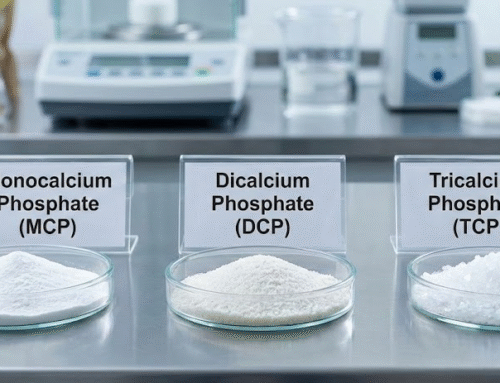
The three common sodium phosphates under E339 are:
| Product | E Number | Common Formula | General Character | Typical Use |
|---|---|---|---|---|
| Monosodium Phosphate | E339(i) | NaH2PO4 | More acidic sodium phosphate | Acidity regulation, buffering, leavening support, sequestration |
| Disodium Phosphate | E339(ii) | Na2HPO4 | More neutral to mildly alkaline sodium phosphate | Buffering, dairy, processed foods, phosphate systems |
| Trisodium Phosphate | E339(iii) | Na3PO4 | More alkaline sodium phosphate | pH adjustment, cleaning-related systems, selected food processing uses |
If a buyer only asks for “sodium phosphate,” the supplier should clarify whether the product required is monosodium phosphate, disodium phosphate or trisodium phosphate. These products are not always interchangeable because they have different pH behavior and application performance.
Related page: E339 Sodium Phosphates: MSP, DSP and TSP
What Does Sodium Dihydrogen Orthophosphate Do in Food?
Sodium dihydrogen orthophosphate has several functions in food processing. Its most important role is pH control and buffering, but it can also support sequestration, stabilization and formulation performance in selected food systems.
| Function | How It Works | Common Applications |
|---|---|---|
| Acidity Regulator | Helps adjust or maintain product acidity | Beverages, sauces, dairy systems, processed foods |
| Buffering Agent | Helps stabilize pH during processing and storage | Processed foods, dairy products, beverages, nutrition products |
| Sequestrant | Binds metal ions such as calcium and magnesium | Canned foods, seafood, beverages, water-based systems |
| Leavening Support | Can react with sodium bicarbonate in selected baking systems | Baking powder, cake mixes, pancake mixes, bakery premixes |
| Stabilizer | Helps improve consistency and reduce separation in some formulas | Dairy products, sauces, dressings, processed foods |
| Phosphorus Source | Provides phosphate in fortified or nutritional formulas | Nutrition products, supplements, fortified foods and beverages |
Common Food Applications of Monosodium Phosphate E339(i)
1. Bakery and Leavening Systems
Monosodium phosphate can be used in selected bakery systems because of its acidic character. When used with sodium bicarbonate, it can help release carbon dioxide and support dough or batter expansion.
Typical bakery-related applications include:
- Baking powder
- Cake mixes
- Pancake mixes
- Muffin mixes
- Cookie mixes
- Bakery premixes
- Dry ingredient blends
For bakery manufacturers, reaction rate, pH, taste impact and compatibility with other leavening acids should be tested in the final formula.
Application page: Food Additives for Bakery Processing
2. Beverages and Water-Based Food Systems
In beverages and water-based systems, sodium dihydrogen orthophosphate may be used to help control acidity and support mineral balance. It can also work as part of a phosphate buffer system.
Typical applications include:
- Flavored drinks
- Sports drinks
- Nutritional beverages
- Powdered drink mixes
- Water-based food systems
- Instant beverage premixes
For beverage buyers, solubility, clarity, pH target and regulatory dosage should be confirmed before bulk purchase.
3. Dairy and Processed Cheese
Sodium phosphates are used in dairy and processed cheese systems because they can support pH control, protein behavior and product stability. Monosodium phosphate may be used alone or together with other phosphate and citrate salts depending on the desired texture and melting behavior.
Typical dairy-related applications include:
- Processed cheese
- Cheese sauces
- Dairy-based sauces
- Creamy desserts
- Milk-based processed products
For cheese manufacturers, the final phosphate system may include monosodium phosphate, disodium phosphate, sodium citrate or other melting salts. Product testing is important because pH and salt balance strongly affect melting, firmness and emulsion stability.
Application page: Food Additives for Cheese and Dairy Processing
4. Meat, Poultry and Seafood Processing
Monosodium phosphate can be used in selected meat, poultry and seafood processing systems as part of a phosphate formulation. However, in many meat and seafood applications, other phosphates such as STPP, SAPP, TSPP or blended phosphates may be more commonly selected for water retention and texture improvement.
Possible applications include:
- Processed meat products
- Sausages
- Cooked meat products
- Seafood products
- Marinades and brines
- Ready-to-eat protein products
For protein processing, phosphate selection should be based on pH target, water retention requirement, processing method, labeling requirement and destination market regulation.
Application pages: Meat and Poultry Processing | Seafood Processing
5. Canned Foods and Processed Vegetables
In canned foods and processed vegetables, monosodium phosphate can help support pH control and metal ion management. This may help improve processing stability depending on the formula and heat treatment conditions.
Typical applications include:
- Canned vegetables
- Canned soups
- Instant soup mixes
- Processed beans
- Heat-processed food systems
For canned foods, the final performance depends on pH, salt level, processing temperature, food matrix and other additives used in the formula.
6. Powdered Foods and Dry Mixes
Monosodium phosphate may also be used in powdered products and dry mixes where pH control, mineral fortification or ingredient stability is required.
Examples include:
- Powdered beverages
- Instant soup powders
- Nutrition powders
- Seasoning blends
- Premixes
- Instant food powders
For dry products, buyers should check particle size, moisture, flowability and compatibility with other powdered ingredients.
Monosodium Phosphate Forms: Anhydrous, Monohydrate and Dihydrate
Monosodium phosphate can be supplied in different hydrate forms. The correct form should be selected according to the application, standard, formula calculation and buyer specification.
| Form | Formula | Common Use | Buyer Focus |
|---|---|---|---|
| Monosodium Phosphate Anhydrous | NaH2PO4 | Food, technical, buffer and industrial applications depending on grade | Assay, P2O5, pH, water insoluble matter, heavy metals |
| Monosodium Phosphate Monohydrate | NaH2PO4·H2O | Food and technical applications depending on specification | Main content, pH, loss on drying, heavy metals, fluoride |
| Monosodium Phosphate Dihydrate | NaH2PO4·2H2O | Food, laboratory and selected industrial applications depending on grade | Main content, moisture, solubility, particle form and documentation |
For quotation, buyers should clearly state whether they require anhydrous, monohydrate or dihydrate material. If not specified, the supplier should confirm this before offering price.
Monosodium Phosphate vs Disodium Phosphate vs Trisodium Phosphate
Monosodium phosphate, disodium phosphate and trisodium phosphate are all sodium phosphates, but they are different products. The biggest practical difference is their acidity or alkalinity.
| Item | Monosodium Phosphate | Disodium Phosphate | Trisodium Phosphate |
|---|---|---|---|
| Abbreviation | MSP | DSP | TSP |
| E Number | E339(i) | E339(ii) | E339(iii) |
| Typical Formula | NaH2PO4 | Na2HPO4 | Na3PO4 |
| pH Character | Acidic | Near neutral to mildly alkaline | Alkaline |
| Main Selection Reason | Acidity adjustment, buffering and leavening support | Buffering, stabilization and food processing support | Alkalinity, pH adjustment and selected processing functions |
| Common Applications | Beverages, bakery, dairy, processed foods, buffers | Dairy, processed foods, phosphate blends, buffers | Selected food processing, water treatment and industrial systems |
If your formula needs acidic phosphate functionality, monosodium phosphate is usually more relevant. If the formula needs a more neutral phosphate buffer, disodium phosphate may be more suitable. If the formula needs stronger alkalinity, trisodium phosphate may be considered.
Food Grade Monosodium Phosphate Specification: What Buyers Should Check
When sourcing food grade sodium dihydrogen orthophosphate, buyers should check the specification carefully. A low price is not enough if the product cannot meet food grade requirements, heavy metal limits or customer documents.
| Test Item | Why It Matters |
|---|---|
| Appearance | Confirms powder or crystal form and visual consistency |
| Main Content / Assay | Confirms purity and phosphate content |
| Phosphorus Pentoxide | Important for phosphate specification and formula calculation |
| pH Value | Important for acidity regulation and buffering performance |
| Water Insoluble Matter | Affects clarity, cleanliness and processing quality |
| Loss on Drying | Important for hydrate form and moisture control |
| Fluoride | Important impurity control item for food grade phosphates |
| Arsenic | Important heavy metal control item |
| Lead | Important for food grade and strict export markets |
| Sulfate and Chloride | May be required by customer specification |
| Particle Size | Affects dissolving, blending and powder handling |
At Guizhou Lvyin Biotech, our monosodium phosphate product page lists food grade and technical grade specification items including main content, pH, water insoluble matter, heavy metals, arsenic, fluoride, sulfate and chloride.
View specification: NaH2PO4 Monosodium Phosphate
Why Low Heavy Metals Matter
Food grade monosodium phosphate may be used in beverages, bakery, dairy, processed foods and nutrition products, so heavy metal control is an important quality factor.
Buyers should pay attention to:
- Lead
- Arsenic
- Fluoride
- Heavy metals as Pb
- Sulfate and chloride if required by customer specification
- Batch COA values, not only general product data
Low heavy metal control is especially important for buyers selling to strict markets such as the United States, European Union, Middle East, Southeast Asia and high-standard food manufacturers.
Documents You Should Request from a Monosodium Phosphate Supplier
For international purchasing, documents are often as important as product quality. A reliable supplier should provide clear technical, food grade and export documents.
| Document | Why It Matters |
|---|---|
| COA | Confirms batch quality and actual test values |
| TDS | Shows product specification, properties and applications |
| SDS / MSDS | Required for safe handling, storage and transport |
| Food Grade Statement | Confirms suitability for food additive applications |
| Halal Certificate | Important for Muslim markets |
| Kosher Certificate | Required by some food manufacturers and distributors |
| Allergen Statement | Often requested by food brands and factories |
| GMO Statement | Often required for international ingredient purchasing |
| Certificate of Origin | May be required for customs clearance |
| Packing List and Commercial Invoice | Required for import and export process |
If your customer has a specific market standard, please confirm all documents before shipment.
Is Sodium Dihydrogen Orthophosphate Safe in Food?
Sodium dihydrogen orthophosphate is permitted for food use in many markets when it meets the applicable food additive standard and is used according to permitted levels and good manufacturing practice.
In the United States, sodium phosphate, including mono-, di- and tribasic sodium phosphate, is listed as generally recognized as safe when used in accordance with good manufacturing practice.
However, allowed applications and dosage limits vary by country, product category and final food. Buyers should always confirm:
- Destination market regulation
- Food category permission
- Maximum permitted use level
- Labeling requirement
- Customer specification
- Halal, Kosher or other certificate requirements
For food factories, sodium dihydrogen orthophosphate should be used only according to local regulations and approved formulation requirements.
Packaging and Storage
Food grade monosodium phosphate is commonly supplied in 25 kg bags or customized export packaging according to buyer requirements.
Recommended storage conditions include:
- Store in a cool, dry and well-ventilated warehouse
- Keep away from moisture
- Keep packaging sealed after opening
- Avoid contamination with strong odors or incompatible materials
- Avoid direct sunlight
- Follow the SDS for handling and storage
Because monosodium phosphate is water soluble, moisture control is important for maintaining powder quality, flowability and shelf life.
How to Choose a Sodium Dihydrogen Orthophosphate Supplier
When choosing a sodium dihydrogen orthophosphate supplier, buyers should evaluate more than price. Food grade phosphate quality affects formulation stability, regulatory compliance and customer approval.
1. Confirm the Correct Product Form
Check whether you need anhydrous, monohydrate or dihydrate monosodium phosphate. Different forms have different molecular weight, moisture and formula calculation requirements.
2. Confirm Food Grade Quality
Make sure the supplier provides food grade monosodium phosphate if the final application is food or beverage processing. Industrial grade material should not be used for food applications.
3. Check Batch COA
Ask for the latest batch COA showing actual test values, including main content, pH, water insoluble matter, heavy metals, arsenic, fluoride and other required items.
4. Ask About Application Support
The correct sodium phosphate depends on the application. A supplier should understand whether you need MSP for bakery, beverage, dairy, meat, seafood, nutrition products, water treatment or industrial use.
5. Confirm Export Documents
For international buyers, COA, SDS, TDS, certificate of origin, packing list and commercial invoice should be confirmed before shipment.
Why Buy Monosodium Phosphate from Guizhou Lvyin Biotech?
Guizhou Lvyin Biotech supplies food grade phosphates, blended phosphate systems, acetates and citrates for international food manufacturers, distributors and ingredient traders.
For sodium dihydrogen orthophosphate / monosodium phosphate E339(i), we can support:
- Food grade monosodium phosphate E339(i)
- Anhydrous, monohydrate and dihydrate forms according to requirement
- Stable quality and batch COA
- Low heavy metal control
- COA, SDS, TDS and food grade documents
- Halal and other documents according to order requirements
- Standard 25 kg export packaging
- Flexible packaging according to buyer requirements
- Export support for importers, distributors and food factories
If you are sourcing monosodium phosphate from China, you can contact us for the latest specification, COA, sample availability and quotation.
Request MSP COA/MSDS and quotation: Contact Us
Frequently Asked Questions About Sodium Dihydrogen Orthophosphate
What is sodium dihydrogen orthophosphate?
Sodium dihydrogen orthophosphate is a sodium phosphate with the formula NaH2PO4. It is also called monosodium phosphate, monobasic sodium phosphate, sodium acid phosphate or MSP.
What is the E number of monosodium phosphate?
The E number of monosodium phosphate is E339(i). It is also known as INS 339(i).
What is sodium dihydrogen orthophosphate used for in food?
It is used as an acidity regulator, buffering agent, sequestrant, stabilizer and phosphate source. It may also support leavening systems in bakery applications.
Is monosodium phosphate the same as disodium phosphate?
No. Monosodium phosphate is E339(i) and has the formula NaH2PO4. Disodium phosphate is E339(ii) and has the formula Na2HPO4. They have different pH behavior and are used differently in food processing.
Is sodium dihydrogen orthophosphate safe?
It is permitted for food use in many markets when it meets food additive standards and is used according to local regulations and good manufacturing practice. Buyers should always confirm the regulation for their target market and final food category.
Can monosodium phosphate be used in baking powder?
It can be used in selected leavening systems because of its acidic phosphate character. However, the final reaction rate and performance should be tested with sodium bicarbonate and other ingredients in the actual formula.
What documents should I request before buying monosodium phosphate?
Buyers should request COA, TDS, SDS or MSDS, food grade statement, Halal or Kosher certificate if required, certificate of origin, packing list and commercial invoice.
Can monosodium phosphate be supplied in 25 kg bags?
Yes. Monosodium phosphate is commonly supplied in 25 kg bags, with palletized shipment or customized export packaging available according to buyer requirements.
Conclusion
Sodium dihydrogen orthophosphate, also known as monosodium phosphate or E339(i), is an important sodium phosphate used for acidity regulation, buffering, sequestration, stabilization and phosphate supplementation in selected food systems.
For buyers, the most important step is to confirm the exact product form, grade, specification, heavy metal limits and required documents before purchase. Monosodium phosphate, disodium phosphate and trisodium phosphate all belong to the E339 family, but they are not the same product.
Guizhou Lvyin Biotech supplies food grade monosodium phosphate and other sodium phosphate products for global buyers. Contact us to request the latest specification, COA and quotation.
Get Monosodium Phosphate E339(i) quotation: Contact Us